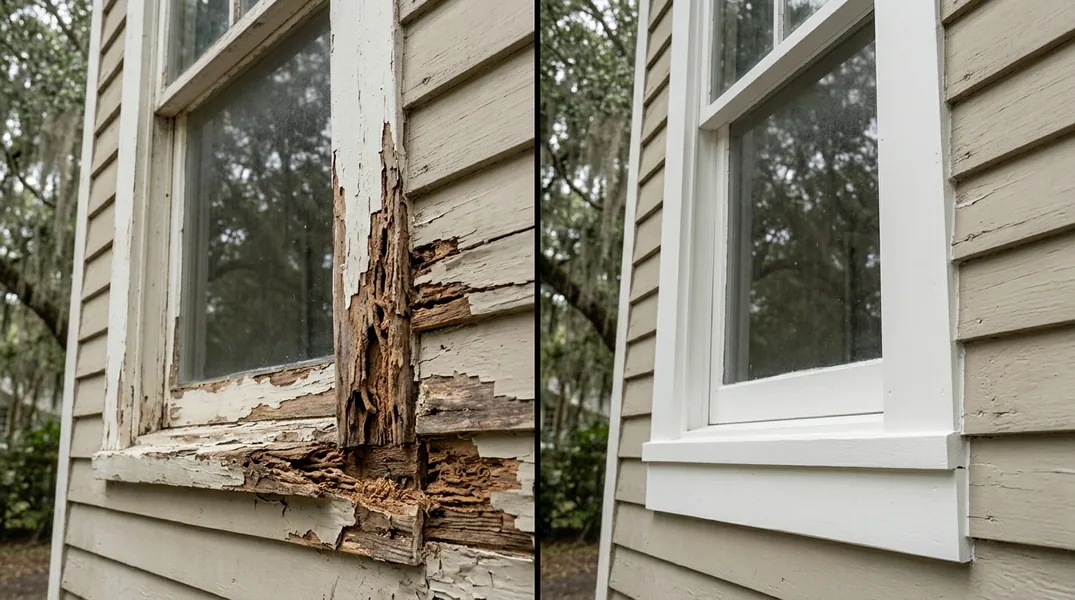
Hurricane Season and Wood Damage: What Homeowners Face
Hurricane season in Mobile brings more than just wind and rain. The combination of moisture, standing water, and prolonged humidity creates the perfect conditions for wood rot and termite infestations to flourish. After a major storm passes, many homeowners discover that the damage extends far beyond what they can see on the surface. Siding that looked intact may hide soft, compromised wood underneath. Roof overhangs and fascia boards absorb moisture for weeks after the storm clears. Foundation areas that flooded become breeding grounds for both dry rot and subterranean termites.
The question most homeowners ask themselves is straightforward: should I repair this damaged wood, or does it need to be replaced entirely? The answer depends on several factors, including the extent of the damage, the structural importance of the wood, and your budget. Understanding these variables will help you make an informed decision and avoid costly mistakes down the road.
Assessing the Damage: Can You Repair Rotted Wood Without Replacing It?
Not all wood rot requires complete replacement. In many cases, Wood Rot & Dry Rot Repair can be performed on affected areas without tearing out the entire section of wood. The key is determining how deep the rot has penetrated and whether the remaining wood is structurally sound. Surface rot that affects only the outer layer of wood can often be treated, cleaned out, and sealed. If you catch the problem early, you can prevent it from spreading to healthy wood and extend the life of the structure by years.
However, there are limits to what repair can accomplish. If the rot has penetrated more than one-third of the way through a structural member, or if it has compromised the load-bearing capacity of a beam or joist, replacement becomes necessary. This is especially true for critical components like floor joists, rim boards, and roof trusses. A professional inspection is the only reliable way to determine whether repair is viable or if replacement is the safer and more cost-effective long-term solution. When in doubt, homeowners in Mobile should request a professional assessment before committing to either approach.
When Replacement Is the Better Choice
Certain situations make replacement the only practical option. If wood rot has affected structural members like Floor Joist & Subfloor Repair areas, the integrity of your home depends on addressing the problem completely. Compromised floor joists can lead to sagging floors, uneven surfaces, and even safety hazards. Similarly, if termites have caused extensive damage to multiple areas of a wall or structural frame, patching individual holes is not enough. The entire section must be replaced to restore proper support and prevent future collapse.
Wood rot in siding and exterior cladding also often warrants replacement rather than repair. While you might repair rotted wood without replacing a small section, widespread rot in siding usually means the underlying structure has already been compromised. Water has likely penetrated behind the damaged boards and affected the sheathing and framing beneath. Replacing the entire siding section ensures that the moisture problem is fully addressed and that your home is properly protected against future weather events. This is especially important after hurricane season when wind-driven rain has had time to work its way into every gap and crack.
Wood Rot & Dry Rot Repair Cost in Mobile: What to Budget
Understanding pricing for wood rot and termite damage repair helps you plan your restoration budget. The cost of repair typically ranges from $500 to $2,500 per affected area, depending on the size of the damaged section and the accessibility of the work. Simple surface rot removal and treatment might be on the lower end, while more involved repairs that require opening up walls or crawl spaces will cost more. Replacement, by contrast, usually runs $1,500 to $5,000 or higher per section, especially if structural members or extensive siding needs to come out and be rebuilt.
Several factors influence the final bill. The location of the damage matters significantly. Rot in a basement or crawl space is often less expensive to address than damage in an upper-story wall or roof. The type of wood also plays a role. Pressure-treated lumber costs more than standard framing lumber, and specialty woods used in siding or trim add to the expense. Labor costs in Mobile vary based on the contractor and the complexity of the job. Rather than guessing at costs, homeowners should request a free estimate from a qualified carpenter. Mobile Carpentry offers transparent assessments so you know exactly what you're paying for and why.
Termite Damage vs. Wood Rot: Different Problems, Different Solutions
Homeowners often confuse wood rot with termite damage, but they require different repair approaches. Wood rot is caused by moisture and fungal growth, while termites actively consume wood as they tunnel through it. Termite Damage Repair must address not only the structural damage but also the pest infestation itself. Simply replacing the damaged wood without treating the termite colony will result in new damage within months. Professional pest control must be coordinated with carpentry repairs to ensure the problem is completely resolved.
Wood rot, by contrast, is solved by addressing the moisture source and removing or treating the affected wood. Once the wood dries out and stays dry, the rot stops spreading. This makes some rot repairs simpler than termite damage restoration. However, if your home has experienced both problems after hurricane season, you need a contractor who can handle both issues or coordinate with pest control specialists. The longer you wait to address either problem, the more extensive and expensive the repairs become. If you suspect termite damage in addition to rot, call a professional immediately for a thorough inspection.
DIY Repair vs. Professional Help: Know Your Limits
Some homeowners attempt to repair rotted wood themselves to save money. Small, non-structural repairs might be manageable for someone with carpentry experience, such as treating surface rot in a fence post or replacing a rotted exterior trim board. However, most hurricane-related wood damage involves structural components or areas that are difficult to access safely. Attempting repairs on roof trusses, floor joists, or load-bearing walls without proper training and equipment is dangerous and can create liability issues if something goes wrong.
Professional contractors like Mobile Carpentry have the tools, knowledge, and experience to assess damage accurately and execute repairs that meet building codes and safety standards. They can also identify hidden damage that homeowners might miss. What seems like a simple rot problem in one spot might be connected to a much larger moisture issue that requires comprehensive solutions. For peace of mind and the assurance that your home is properly restored after hurricane damage, hiring a licensed professional is the wisest investment. Contact Mobile Carpentry at (251) 333-6112 or request a free estimate to discuss your specific situation and get expert guidance on repair versus replacement.
Looking for a professional carpentry contractor in Mobile? Mobile Carpentry responds fast for all your carpentry needs.
Get a Free QuoteOur services: Wood Rot & Dry Rot Repair · Termite Damage Repair · Floor Joist & Subfloor Repair