Dry Rot vs Termite Damage: Understanding the Difference
If you own a home in Mobile, you've probably heard horror stories about wood damage. Two culprits top the list: dry rot and termite damage. While both can compromise your home's structural integrity, they're caused by entirely different factors and require different solutions. Understanding which problem you're facing is the first step toward protecting your investment.
Dry rot is a fungal decay that occurs when wood loses moisture and becomes brittle. It thrives in damp, poorly ventilated spaces and can spread rapidly through wood structures. Termite damage, on the other hand, is caused by living insects that actively consume wood as they tunnel through your home. The key distinction: dry rot is a fungal disease, while termite damage is the result of pest activity. Both are serious, but the treatment approaches differ significantly. If you suspect either issue, contact Mobile Carpentry for a free estimate to determine what you're dealing with.
What Does Wood Rot Look Like: Visual Signs to Watch For
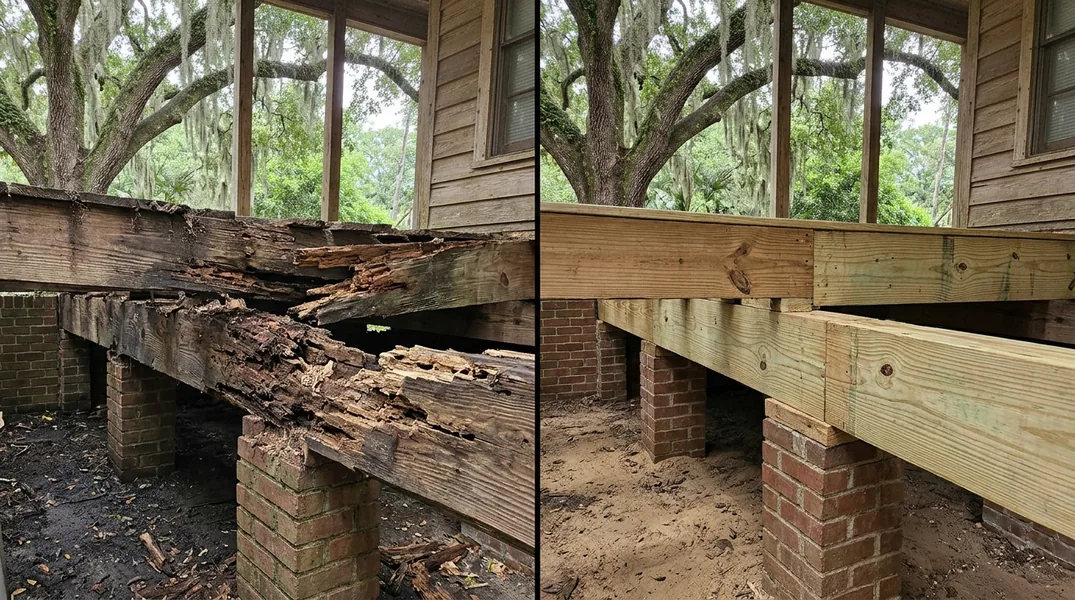
Identifying dry rot early can save you thousands in repair costs. What does wood rot look like? Dry rot typically appears as wood that has turned a dark brown or reddish color, becoming soft and crumbly to the touch. The affected wood may also develop a distinctive pattern of deep cracks that form cubes or rectangles on the surface. You might notice a musty odor in areas where dry rot is present, which is caused by the fungal growth breaking down the wood fibers.
One of the most telling signs of dry rot is the presence of fungal fruiting bodies, which look like flat, pancake-shaped growths on the wood surface. These can range in color from gray to rust-brown. The wood surrounding these fruiting bodies becomes increasingly weakened and may feel spongy or hollow when probed. Unlike termite damage, dry rot doesn't leave behind visible tunnels or mud tubes. Instead, the decay spreads through the wood grain itself, creating a honeycomb-like structure inside that eventually causes the wood to collapse. If you notice any of these signs in your Mobile home, prompt inspection is essential to prevent the damage from spreading to other structural components.
Formosan Termite Signs in Wood: What Pest Damage Looks Like
Formosan termite signs in wood are particularly concerning for homeowners in the Gulf Coast region, where these aggressive termites are common. Unlike dry rot, termite damage appears as galleries or tunnels running through the wood, often following the grain pattern. The wood around these tunnels may appear relatively intact on the surface but is hollowed out underneath, creating a paper-thin shell. If you tap on infested wood, it may sound hollow, and you might see small piles of sawdust-like pellets (called frass) beneath the damaged area.
Formosan termites, which are more destructive than native subterranean termites, often leave behind mud tubes running from the soil to the wood they're consuming. These tubes are about the thickness of a pencil and serve as protected highways for the termites to travel. You may also notice small holes in the wood surface where termites have emerged, along with a faint, musty odor. The damage pattern tends to follow wood grain and structural members, and can progress rapidly if left untreated. Formosan termites are particularly aggressive and can cause severe structural damage in a relatively short time, making early detection crucial. If you suspect termite activity, Termite Damage Repair services should be your next step.
Key Differences: How to Tell Them Apart
The best way to distinguish between dry rot and termite damage is to examine the damage pattern closely. Dry rot creates a uniform, cube-like cracking pattern as the wood loses moisture and shrinks. The damage is generally localized to areas with poor ventilation or moisture problems. Termite damage, by contrast, creates tunnel networks that follow the wood grain and can spread across large areas of your home. Termites also leave behind visible evidence like mud tubes, frass, or actual insects, whereas dry rot leaves only the fungal fruiting bodies and the decayed wood itself.
Another distinguishing factor is the location of damage. Dry rot typically appears in basements, crawl spaces, bathrooms, and other areas prone to moisture accumulation. Termite damage can occur anywhere in your home where wood is present, though termites prefer areas with access to soil and moisture. If you press on dry-rotted wood with a screwdriver, it will crumble easily and feel powdery. Termite-damaged wood, while hollow inside, often maintains a harder outer shell and may require more force to penetrate. When in doubt, the most reliable approach is to have a professional inspect your home. The team at Mobile Carpentry can identify the source of your wood damage and recommend the appropriate repairs.
Wood Rot & Dry Rot Repair Near Me: When to Call a Professional
If you've identified signs of dry rot or termite damage in your home, professional intervention is essential. Wood Rot & Dry Rot Repair requires removing the affected wood and addressing the underlying moisture problem to prevent recurrence. Simply patching the surface won't solve the issue; the root cause must be eliminated. This might involve improving ventilation, fixing plumbing leaks, or waterproofing basement areas. A professional carpenter can assess the extent of damage and determine whether affected structural components need replacement or reinforcement.
Structural components like Floor Joist & Subfloor Repair require specialized expertise, especially if the damage affects load-bearing elements. In severe cases, Beam Replacement & Load-Bearing Wall Removal may be necessary to restore your home's integrity. Mobile Carpentry serves homeowners throughout Mobile and surrounding areas, providing comprehensive damage assessment and repair solutions. We recommend getting a professional inspection as soon as you suspect wood damage. Call us at (251) 333-6112 to schedule your evaluation and receive a detailed repair plan.
Prevention: Protecting Your Home from Future Damage
The best defense against both dry rot and termite damage is prevention. For dry rot, maintain proper ventilation in crawl spaces, basements, and attics. Ensure gutters and downspouts direct water away from your foundation, and promptly repair any leaks in your roof or plumbing. Keep wood-to-soil contact to a minimum by maintaining at least six inches of clearance between wood structural members and the ground. Regular inspections, especially in older homes, can catch early signs of fungal growth before significant damage occurs.
Termite prevention requires a different approach. Have your home inspected annually for signs of termite activity, particularly if you live in an area prone to these pests. Reduce wood-to-soil contact, remove dead trees and stumps from your yard, and avoid storing firewood against your home's exterior. Consider having a professional pest control treatment applied to your foundation and soil around your home. Additionally, maintain proper drainage and ventilation to reduce moisture levels, which attract both termites and the fungi that cause dry rot. By taking these preventive steps, you can significantly reduce your risk of costly structural damage.
Looking for a professional carpentry contractor in Mobile? Mobile Carpentry responds fast for all your carpentry needs.
Get a Free QuoteOur services: Wood Rot & Dry Rot Repair · Termite Damage Repair · Floor Joist & Subfloor Repair