Why Historic Raised Cottages and Townhouses Demand Different Care
If you own a raised cottage in Oakleigh or a townhouse near De Tonti Square in Mobile, you're steward of a piece of architectural history. These homes, many built in the late 1800s and early 1900s, are engineering marvels designed for the Gulf Coast climate. The elevated foundation, wraparound porches, and ventilated crawl spaces were deliberate choices to manage moisture and heat. But here's what most owners don't realize: that same elevation and age that makes these homes charming also makes them vulnerable to wood damage that modern houses rarely face.
The raised design means your home's wooden support structure is constantly exposed to humidity, temperature swings, and seasonal flooding risk. Unlike slab foundations, the space beneath your home creates a perfect environment for moisture accumulation. Add a century or more of settling, original wood that's now brittle, and deferred maintenance, and you have a recipe for serious structural problems. The good news is that understanding these vulnerabilities puts you ahead. Proactive maintenance can add decades of life to your home and prevent emergency repairs that cost tens of thousands of dollars.
Understanding Wood Rot in Historic Mobile Homes
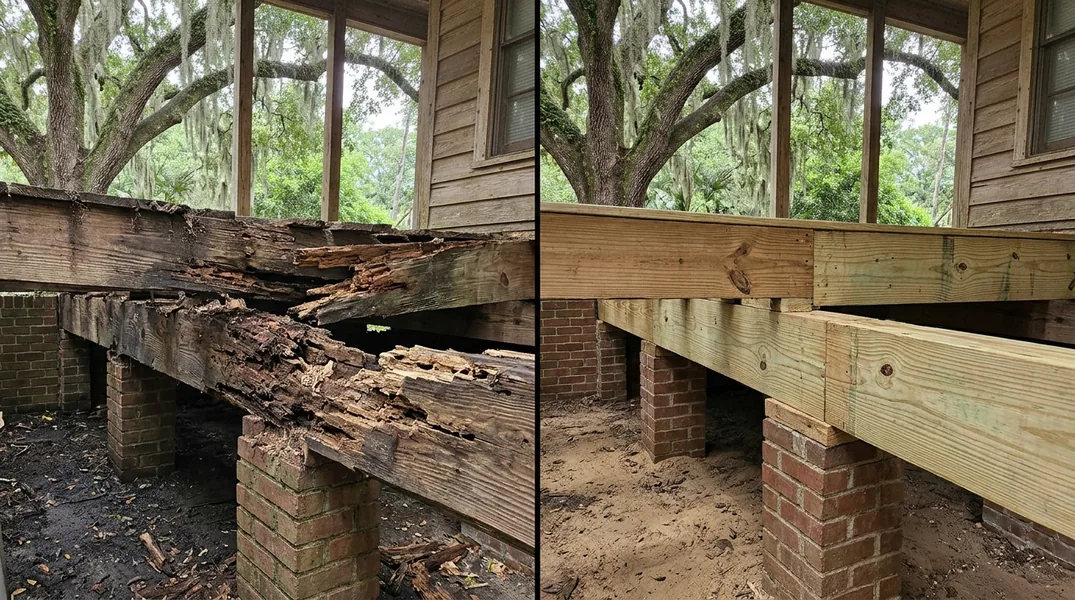
Wood Rot and Dry Rot Repair is the most common issue we see in raised cottages throughout Mobile. Dry rot, despite its name, is actually caused by moisture, not dryness. It's a fungal decay that spreads through wood, turning it soft and crumbly. In raised homes, this typically starts in the crawl space where ventilation is poor, then works its way up into floor joists, sill plates, and eventually the visible structure of your home. You might notice soft spots on your porch floor, a musty smell in certain rooms, or worse, floors that feel bouncy or sag slightly.
Wet rot is another culprit, especially where water intrusion occurs around windows, doors, or compromised siding. Historic wood siding, while beautiful, can trap moisture behind paint if not properly maintained. Once water gets behind the wood, it has nowhere to go in those tight wall cavities. The wood stays damp, fungi thrive, and structural integrity slowly vanishes. The tricky part is that early-stage rot is invisible. By the time you see staining or soft wood, the damage has often spread significantly. This is why annual inspections of your crawl space and foundation are non-negotiable for historic home owners.
Wood Siding Repair and Maintenance: Protecting Your Home's Exterior
The exterior of your raised cottage or townhouse is its first line of defense against the elements. Historic wood siding repair is an investment that pays dividends in preventing interior damage. Many homes in the Oakleigh district still have original or near-original wood siding, often painted in period-appropriate colors. This siding is both a charm point and a maintenance responsibility. Paint fails, wood expands and contracts with humidity, nails work loose, and gaps develop where water can sneak in.
Proper maintenance means inspecting your siding annually, especially after storms or heavy rains. Look for peeling paint, soft spots, gaps between boards, and areas where the wood feels spongy to the touch. Repaint every 5 to 7 years to maintain the protective seal. If you notice rotted sections, don't delay. A small area of rot can be cut out and patched, but if it's extensive, that section of siding needs replacement. We recommend using wood that matches the original species and dimension whenever possible, especially if your home is historically significant. Modern pressure-treated lumber can work for structural repairs, but for visible siding, authentic materials preserve both integrity and value.
Floor Joist and Subfloor Issues: Recognizing the Warning Signs
Floor Joist and Subfloor Repair is critical in homes where the foundation is elevated. Your floor joists are the horizontal beams that support your floors, and they're often the first structural members to suffer from moisture and rot. If you notice that your floors feel soft, bouncy, or uneven, or if you hear creaking that wasn't there before, have a professional inspect your crawl space immediately. These aren't cosmetic issues; they're signs that your home's structural skeleton is weakening.
In raised cottages, the crawl space is your window into the home's health. A moisture barrier, proper ventilation, and regular inspections can prevent most joist problems. However, many historic homes lack adequate moisture control. If your crawl space is damp, musty, or has visible water pooling, you're at high risk for joist decay. Sometimes the solution is as simple as adding a vapor barrier and improving drainage around the foundation. Other times, compromised joists need partial or full replacement. The cost varies greatly depending on the extent of damage and whether the joists are load-bearing, so getting a free estimate from a qualified carpenter is essential before budgeting.
When to Call a Professional: Structural Concerns and Load-Bearing Elements
Not every wood repair is a DIY project, especially in historic homes where structural integrity is at stake. If your inspection reveals rot in a beam, significant joist damage, or problems with the sill plate (the wood that sits on top of your foundation), you need professional help. Beam Replacement and Load-Bearing Wall Removal require engineering expertise, proper temporary support, and code compliance. Mistakes in these areas can compromise your entire home's safety.
Another concern in older raised homes is Termite Damage Repair. Termites love the moist, sheltered environment under raised cottages. They can cause damage that mimics dry rot, but the treatment and repair approach is different. A professional inspection can distinguish between fungal rot and termite damage, which is crucial for proper remediation. Mobile Carpentry serves the Mobile area with expertise in historic home repair. If you're unsure whether your situation requires professional intervention, call (251) 333-6112 for a consultation. It's always better to catch problems early than to face emergency repairs later.
Creating a Maintenance Plan for Your Historic Home
The best approach to owning a raised cottage or historic townhouse is prevention through consistent maintenance. Start by documenting the current condition of your home. Walk the crawl space with a flashlight, take photos, and note any areas of concern. Establish a seasonal routine: inspect after heavy rains, check for new paint failures in spring, ensure gutters and downspouts are clear and directing water away from the foundation, and verify that your crawl space remains dry and well-ventilated.
Budget annually for maintenance, even if you're not doing major repairs that year. Preventive spending is dramatically less expensive than emergency structural repairs. Keep records of all work done, including photos and dates. This documentation is invaluable if you ever sell your home or need to file an insurance claim. If you discover damage during your inspections, get multiple professional opinions before proceeding. Different contractors may recommend different solutions, and understanding your options helps you make informed decisions. For guidance specific to your home's condition and pricing for repairs, reach out to Mobile Carpentry at (251) 333-6112 or request a free estimate online. Your historic home is an investment worth protecting.
Looking for a professional carpentry contractor in Mobile? Mobile Carpentry responds fast for all your carpentry needs.
Get a Free QuoteOur services: Wood Rot & Dry Rot Repair · Termite Damage Repair · Floor Joist & Subfloor Repair