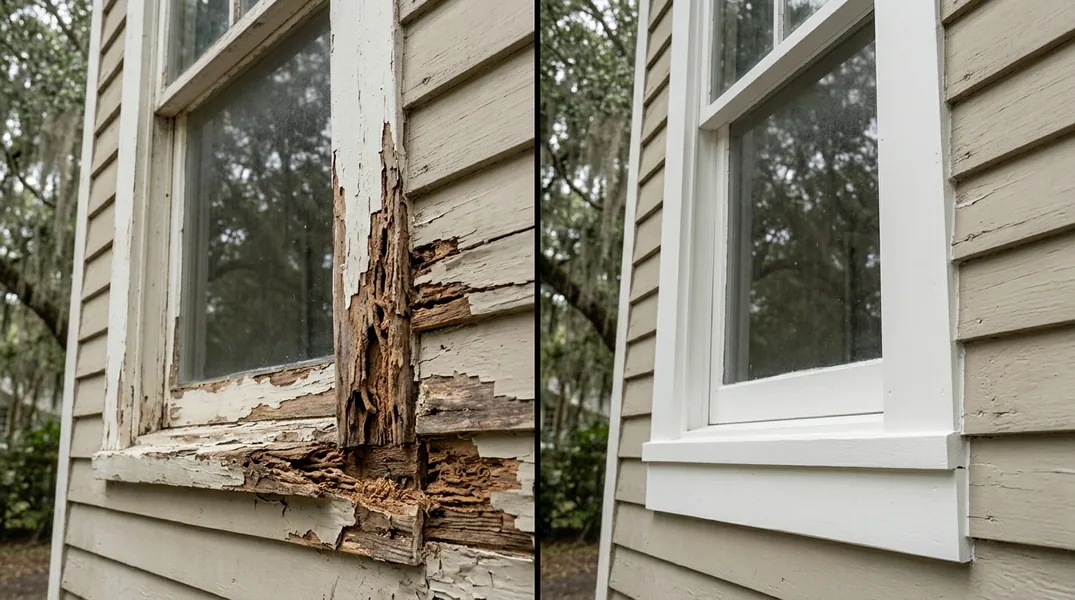
Why Mobile's Climate Makes Wood Rot and Termite Damage Inevitable
If you own a home in Mobile, you're living in one of the most challenging environments in the United States when it comes to wood-destroying pests and moisture damage. The Gulf Coast's subtropical climate, combined with high humidity and frequent rainfall, creates nearly perfect conditions for both wood rot and Formosan termites to thrive. Unlike drywood termites that require little moisture, Formosan termites actually prefer damp environments, and our region provides exactly that year-round.
The problem is compounded by Mobile's proximity to the water. Homes near the coast or in areas with poor drainage are especially vulnerable. Moisture seeps into crawl spaces, attics, and foundation walls, softening wood and making it irresistible to termites and fungal decay. Many homeowners don't realize that the damage begins silently, often taking months or even years before visible signs of termite damage appear on the surface.
Understanding Formosan Termites: Mobile's Most Destructive Pest
Formosan termites are not native to Alabama, but they've established themselves firmly along the Gulf Coast, and Mobile is no exception. These termites are significantly more aggressive and destructive than native subterranean termites. A single Formosan colony can contain up to 20 million individuals and can consume up to a pound of wood per day. To put that in perspective, a native termite colony might consume that amount in several months. This aggressive feeding behavior means that formosan termite damage repair often requires extensive structural work rather than simple treatments.
What makes Formosan termites particularly dangerous is their ability to build mud tubes and nest both in soil and inside wood structures. They don't need ground contact to establish a colony inside your home, which means they can attack wood in attics, walls, and upper floors. Homeowners often discover the damage only after noticing soft spots in flooring, hollow-sounding wood, or visible mud tubes on foundation walls. By that time, the structural integrity of the home may already be compromised, requiring professional Floor Joist & Subfloor Repair or even Beam Replacement & Load-Bearing Wall Removal.
Wood Rot vs. Termite Damage: How to Spot the Difference
Many homeowners confuse wood rot with termite damage, but they require different approaches to repair. Wood rot is caused by fungal decay that breaks down the wood's cellular structure, typically in areas where moisture accumulates. Rotted wood feels soft and spongy, crumbles easily when probed, and may have a distinct musty odor. Dry rot, despite its name, is also a fungal issue that thrives in damp conditions and can spread rapidly through a home if left untreated. Wood Rot & Dry Rot Repair focuses on removing the affected wood and addressing the moisture source.
Termite damage, by contrast, leaves wood that appears hollow or creates galleries and tunnels inside the wood. The surface may look intact, but the interior is hollowed out. You might notice mud tubes on foundation walls, discarded wings near windows, or a rustling sound inside walls. The key difference is that termites create voids and tunnels, while rot simply softens and degrades the wood. Both problems are common in Mobile's humid environment, and many homes suffer from both simultaneously. If you're unsure what you're dealing with, it's worth getting a professional inspection to determine the extent of damage and the best repair strategy.
Common Signs of Termite Damage in Mobile Homes
Recognizing the early signs of termite damage can save you thousands in repair costs. One of the most obvious indicators is the presence of mud tubes on foundation walls, basement walls, or crawl space supports. These tubes are highways that termites use to travel between their nest in the soil and the wood they're consuming. You might also notice swarms of termites or piles of discarded wings near windows and doors, especially during spring and early summer when they reproduce. Inside the home, signs of termite damage include sagging or bowing floors, soft spots in wooden beams or joists, and wood that sounds hollow when tapped.
Another warning sign is increased moisture in crawl spaces or basements, which attracts both termites and wood rot. Peeling paint, warped doors or windows, and visible cracks in foundation walls can also indicate termite or moisture problems. Many homeowners in Prichard, Chickasaw, and surrounding areas don't notice damage until it becomes severe because termites work silently inside walls and under floors. This is why annual inspections are critical in our region. If you spot any of these warning signs, contact Mobile Carpentry at (251) 333-6112 to schedule a free estimate and get a professional assessment.
Why Professional Repair Matters on the Gulf Coast
Attempting DIY repairs on termite or wood rot damage is rarely successful and often makes the problem worse. The Gulf Coast's climate and the aggressive nature of Formosan termites mean that any repair work must be done correctly the first time. Simply replacing rotted wood without addressing the moisture source will result in the same problem recurring within months. Similarly, treating termites without removing all damaged wood and addressing conducive conditions leaves your home vulnerable to reinfestation. Professional Termite Damage Repair requires expertise in structural assessment, moisture control, and proper replacement of load-bearing components.
Mobile Carpentry specializes in comprehensive repairs that address both the immediate damage and the underlying conditions that caused it. Whether you need Wood Rot & Dry Rot Repair, Floor Joist & Subfloor Repair, or structural reinforcement, our team understands the unique challenges of building and maintaining homes in Mobile's environment. We use quality materials rated for coastal conditions and ensure that all repairs meet or exceed building codes. Investing in professional repairs now protects your home's value and structural integrity for years to come.
Wood Rot & Dry Rot Repair Cost in Mobile: What to Budget
The cost of Wood Rot & Dry Rot Repair varies significantly depending on the extent of damage, the location of affected wood, and whether structural components are involved. Minor rot in trim or siding might cost a few hundred dollars, while extensive rot affecting floor joists, beams, or load-bearing walls can run into the thousands. On the Gulf Coast, where moisture problems are endemic, homeowners should expect that repairs will be more involved than in drier climates. The pricing for termite damage is similarly variable but generally higher because the damage is often more widespread and hidden.
Rather than viewing repair costs as an expense, consider them an investment in preventing catastrophic structural failure. A $5,000 repair today is far cheaper than replacing an entire floor system or dealing with foundation issues down the road. The best approach is to get a detailed assessment from a qualified contractor who can provide accurate pricing based on your specific situation. Mobile Carpentry offers transparent estimates with no hidden fees. Contact us at (251) 333-6112 or request a free estimate online to understand exactly what your home needs and what it will cost to fix it properly.
Looking for a professional carpentry contractor in Mobile? Mobile Carpentry responds fast for all your carpentry needs.
Get a Free QuoteOur services: Wood Rot & Dry Rot Repair · Termite Damage Repair · Floor Joist & Subfloor Repair